
Skip to content
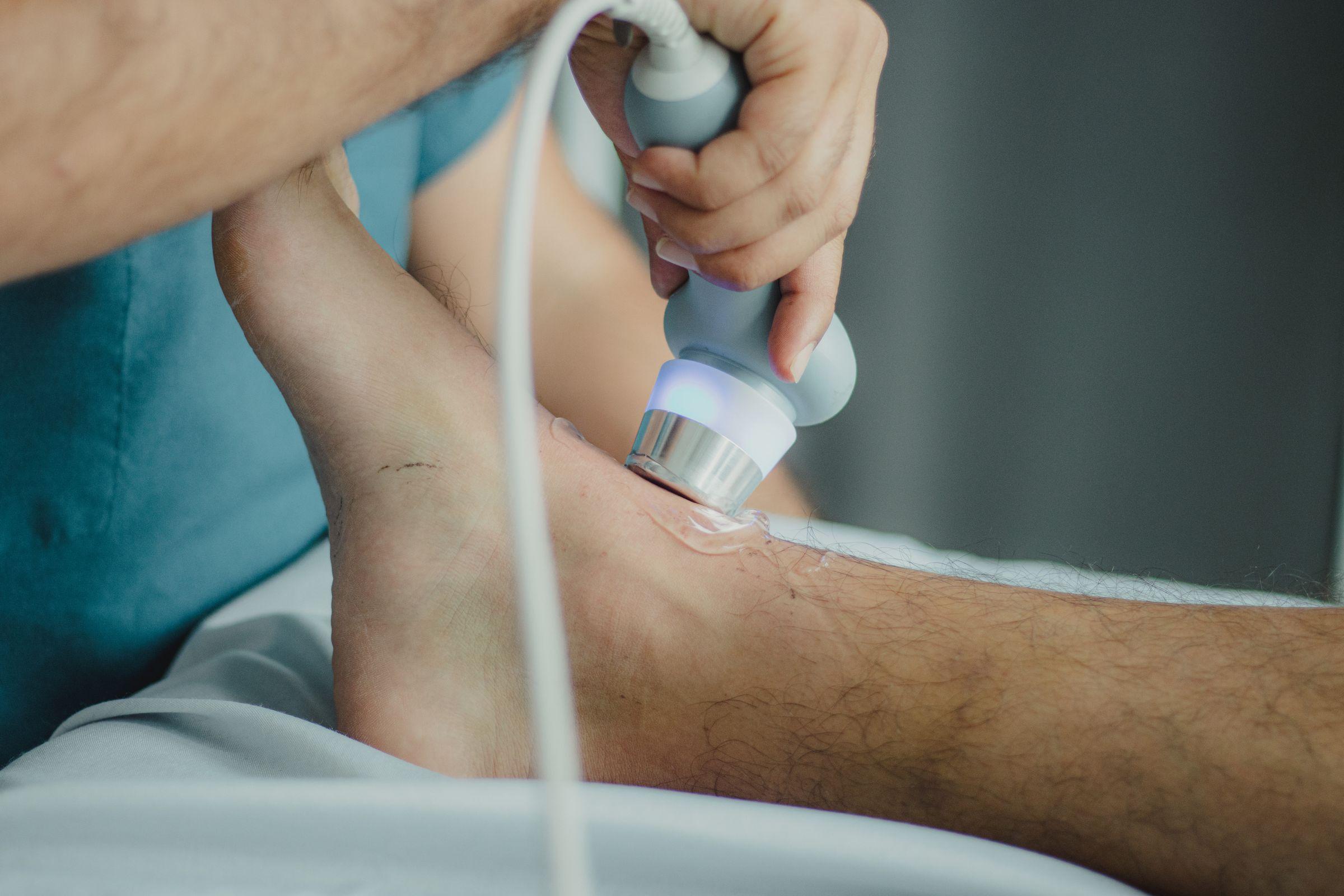
A handheld shockwave applicator gliding over conductive gel on a patient's ankle

Radial pressure wave therapy at the Dashwood and Humble clinics.

Shockwave therapy for stubborn tendon pain

A non-invasive option for selected muscle and tendon conditions, used alongside the exam and the plan your clinician recommends.

Why shockwave

What the treatment involves

Radial pressure waves reach soft tissue around the treatment area. The device is a handheld applicator, and there is no incision.

  • Non-invasive, no incision
  • Sessions of about 12 to 15 minutes
  • No downtime built into the visit
  • Drug free

Where to book

Shockwave is offered at two clinics

Fuqua and Cypress do not have the shockwave device. Fuqua is the clinic with MLS laser therapy instead.

Hours differ by clinic. Call the clinic to schedule an appointment.

Read the clinic pages for shockwave at Dashwood and shockwave in Humble.

Conditions

Conditions a clinician may evaluate for shockwave

A clinician has to determine whether radial pressure wave therapy is appropriate for your diagnosis. Not every condition on this list is treated with it.

  • Plantar fasciitis and heel pain
  • Achilles tendon pain
  • Patellar tendon pain
  • Tennis elbow
  • Golfer's elbow
  • Rotator cuff tendinopathy
  • Hip and gluteal tendon pain
  • Muscle trigger points
  • Other persistent soft-tissue pain

What is shockwave therapy?

Shockwave therapy applies acoustic pressure waves through the skin to a targeted area. The mechanical stimulation is intended to support the body's own tissue response and rehabilitation process.

The device this practice uses is an RPW 2 radial pressure wave unit. RPW stands for radial pressure wave, a form of extracorporeal shockwave therapy (ESWT). A handheld applicator sends controlled pressure waves into the treatment area, and the waves spread through nearby soft tissue over a broader area than a focused, high-energy shockwave device.

How it may support healing

The pressure waves are used to help reduce muscle pain and soreness and may improve mobility. They temporarily increase local blood flow, and in some tissues may support the formation of new small vessels so oxygen and nutrients reach the area.

Some clinicians use shockwave to support repair and remodeling of tendon, connective tissue, and scar-like tissue. Benefits vary from person to person. Shockwave may complement physical therapy, and it is not a replacement for an injection or surgery when one of those is what your case needs.

What happens during a visit

First there is an evaluation: the clinician reviews your symptoms, health history, and treatment goals, and decides whether shockwave is appropriate for your diagnosis.

If it is, gel goes on the skin and the applicator is moved over the treatment area. You may feel tapping, pulsing, or pressure. Tell the clinician if the sensation is uncomfortable, because the intensity is adjusted to your tolerance and the treatment goals. A session is generally planned for about 12 to 15 minutes, depending on the area.

After treatment

Short-term tenderness, redness, bruising, swelling, or a tingling numbness can appear in the treated area. That is expected. Follow the activity and home-care instructions your clinician gives you, and contact the clinic promptly if symptoms are severe, unusual, or getting worse.

Individual response varies, and improvement is not guaranteed. Your clinician will talk through follow-up when it is appropriate.

Before treatment

Tell your clinician about your health history, especially if any of the following apply: pregnancy or possible pregnancy; blood thinners, a bleeding or clotting problem, or a history of thrombosis; cancer; an infection, open wound, or reduced sensation in the area; recent surgery, fracture, or injection near the area; or an implant near the treatment area.

Any of these may mean shockwave is not the right choice, or that the treatment plan needs to change. That is a conversation for the visit, not something this page can decide.

Questions

Questions about shockwave therapy

Which clinics offer shockwave therapy?

Dashwood and Humble. Fuqua and Cypress do not have the device; Fuqua is the clinic with MLS laser therapy instead. Phone the clinic you want and say that shockwave is the treatment you are asking about.

Does shockwave hurt?

Most people feel tapping, pulsing, or pressure during the session. Some areas are more sensitive than others. The clinician sets the intensity to what you can tolerate, so tell them if it becomes uncomfortable rather than waiting for the visit to end.

How long is a session?

About 12 to 15 minutes for the treatment itself, depending on the area being treated and your tolerance. The visit also includes the evaluation and any other care that belongs in your plan.

Is one session enough?

Shockwave is usually part of a plan rather than a single visit. Your clinician will say what follow-up fits your case after the exam. Results vary, and improvement is not guaranteed.

MLS laser therapy is a different treatment, offered at Fuqua. Read about MLS laser therapy, or browse theConditions we treat. Clinic pages: shockwave at Dashwood and shockwave in Humble.