


Skip to content
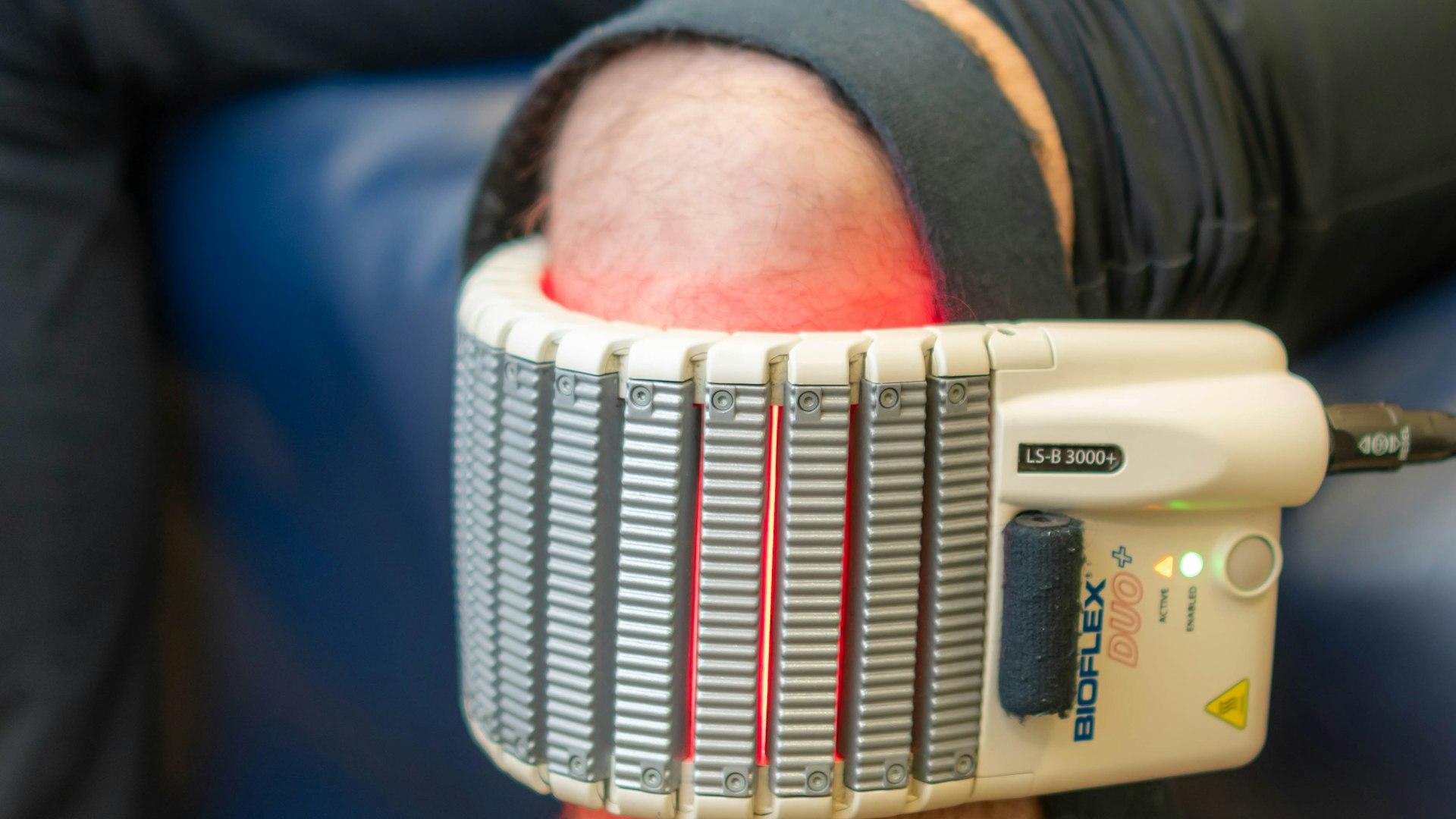
A light therapy device wrapped around a patient's knee

Fuqua office only

Manage pain. Reduce inflammation. Restore mobility.

MLS laser therapy for chronic and acute pain. Fuqua office only.

Why MLS laser

Gentle, drug-free pain relief

  • Non-surgical treatment
  • No known side effects
  • Drug free
  • Rapid results

Conditions

MLS laser therapy treats pain and inflammation associated with

  • Achilles tendonitis
  • Plantar fasciitis
  • Tennis elbow
  • Tendinosis
  • Arthritis and bursitis
  • Postsurgical recovery
  • Sacroiliitis
  • Sprains and strains
  • Work and sports injuries
  • Disc degeneration
  • Hip and knee conditions
  • Carpal tunnel syndrome
  • Trochanteric bursitis
  • Rotator cuff tears
  • Neck and back injuries
  • Sciatica

What is MLS laser therapy?

The FDA-cleared MLS Therapy Laser uses concentrated light energy to stimulate the body’s own healing process to minimize pain, inflammation, and arthritis and reduce recovery times so you can return to a pain-free life. By using specific wavelengths and a patented delivery system, MLS laser therapy can speed up the process of relieving inflammation and pain associated with many conditions, including arthritis.

The MLS Therapy Laser has a unique pain-relieving effect, which can be dramatic. Many patients feel significantly better in just a few treatments.

How MLS laser therapy works

MLS stands for Multi-Wave Locked System. It is a Class IV laser used to treat pain, inflammation, and arthritis, and it uses two synchronized wavelengths: 808 nanometers, which targets inflammation and has a longer-lasting effect, and 905 nanometers, which acts faster for pain relief.

Both wavelengths sit in the infrared spectrum, so the beam is invisible to the eye. At the cell level, the light energy is used to help cells clear waste products and take in oxygen and nutrients, and it blocks pain signals on their way to the brain while triggering the release of endorphins and enkephalin.

The laser penetrates about 3 to 4 cm and generates no heat. The technology was cleared by the FDA in 2002.

What a course of treatment looks like

MLS laser treatments are cumulative, so the benefit builds across a series rather than arriving in one visit. Acute cases are typically treated with 6 visits, every other day for about 2 weeks. Chronic cases are typically treated with 10 visits, every other day for about 3 weeks.

Your clinician sets the actual schedule from the exam. If you are traveling from another clinic, call Fuqua first so the plan matches your time in Houston.

Will it hurt?

Through years of research and development, the MLS laser was designed to treat conditions without an excessive thermal effect, often felt as heat. Most people report that they do not feel anything during the treatments. Occasionally, you may feel a slight warming sensation at the treatment site, which is normal and is a sign that the inflammation is being relieved and that your body is responding.

Will MLS laser therapy work for me?

For 85–90% of patients with musculoskeletal pain, inflammation, or arthritis, the answer is yes. Most patients with pain, inflammation, or arthritis report significant pain relief from MLS laser therapy. Whether you have shoulder and neck pain, a rotator cuff problem, carpal tunnel syndrome, aching knees, Achilles tendonitis, plantar fasciitis, sciatica, or other musculoskeletal pain, you are likely to benefit.

Many patients who were scheduled for surgery were able to delay or cancel that surgery because MLS laser therapy alleviated the condition and reduced or eliminated the pain.

Getting to the Fuqua office

MLS laser therapy is at Fuqua Health & Rehab only: 10655 Fuqua Street, suite A, Houston, Texas 77089. Call (713) 943-7477. The building is on Fuqua Street in the South Belt / Ellington area, near the Fuqua exit on Interstate 45, the Gulf Freeway. Use ZIP 77089. A pin for a different Fuqua address is the wrong door.

Monday, Wednesday, and Friday run 8:00 a.m. to 6:00 p.m. Tuesday and Thursday run 8:00 a.m. to 4:00 p.m. Saturday is 9:00 a.m. to 12:00 p.m. Sunday is closed. If you are coming from another office in the practice, call this number before you drive so the laser visits match the days you can be in southeast Houston. The website does not reserve the chair.

There is no parking diagram for suite A. Call from the lot if you are unsure which entrance to use. The map on the Fuqua clinic page opens this office's Google listing. The rest of the address, hours, and what a first exam includes are on that clinic page.

What a session feels like

Most people say they feel little while the laser is on. The beam is infrared, so you do not watch a light. A slight warmth at the spot can happen. The practice describes that warmth as a normal sign that inflammation is easing and the body is responding. If the warmth bothers you, say so. The clinician is the one who changes the settings.

The visit is not only the light. It starts with an exam. The laser is added when that exam supports it. You should leave knowing how many more trips are planned, not a guess from a coupon.

How much does it cost, and will insurance pay?

We do not list a price for MLS laser therapy on this website. You will get a price after your evaluation at suite A. Call (713) 943-7477 and ask. Do not use a dollar amount from another clinic's page.

We also do not publish whether Medicare, a health plan, or a wreck policy pays for these visits. People ask. The honest answer is that this site does not state it. The Fuqua desk can tell you what they know once they have seen you. We are not saying a plan will pay, and we are not saying it will not.

Two practical limits

A course is a series, not one Saturday. Acute problems are typically described as about 6 visits over about 2 weeks. Longer-running problems are typically described as about 10 visits over about 3 weeks. Your clinician sets the real count. The drawback you can plan for is the repeated drive to 77089.

The device is only at this office. If you live on the Eastex or on FM 529, the light still means coming to Fuqua Street. Occasional warmth is the sensation the practice already describes. We are not adding a new list of medical side effects beyond what this page has said for years.

Achilles and other tendons

Achilles tendonitis is on the condition list this practice already publishes for the laser. So are tennis elbow, plantar fasciitis, and rotator cuff problems. Being on the list is not a promise that the laser is right for your tendon. The exam at suite A decides. If the tendon might be torn, or if you cannot walk on it, start with urgent medical care instead of a laser slot.

Is the effect long lasting?

For most patients, yes. While each person and each condition varies, many patients receive tremendous relief from pain and inflammation through a series of MLS laser therapy treatments. Most patients may not need additional treatments in the future. Some conditions, like arthritis, are degenerative.

Once you feel better, you can be more active, and that activity helps limit the long-term effects of arthritis. You may still need an occasional single MLS treatment every 4 to 6 weeks over the course of the year to hold inflammation down and keep arthritic pain in check.